
RISIS Humanitarian Time Bank

A Strategic Community Building Plan with Volunteerism Time Currency
1. The Concept- the story of Mizushima’s discoveries and Cahn’s contributions
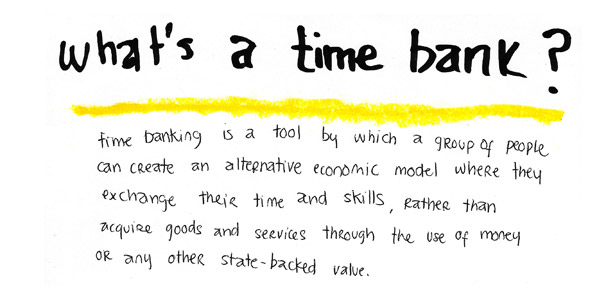
An innovation in human capital economics; the time banking system introduced by Ms.Teruko Mizushima in 1973 and developed further by American Law Professor Dr. Edgar S. Cahn and associates in the 1990s. A system of human capital management designed to foster mutual aid in communities, time banking has grown into an international movement. Its potential has been bolstered by the advent of online time banking software.
Mizushima group now includes working women and a small number of men. As of 2007, there were 125 branches across Japan, with the greatest concentration in the Kansai region around Osaka where the organization originated. In 1995, Cahn founded TimeBanks USA and the organization has since evolved from a set of experimental programs to an experienced and capable incubator for new time banking initiatives. TimeBanks USA and its UK counterpart have been instrumental in establishing time banking into a movement active in more than 30 countries and replete with conferences, regional associations, training materials, scholarly papers, and multiple software systems. There are 500 registered time banks in the US, and they have collectively enrolled more than 37,000 members. The smallest American time bank has 15 members; the largest has 3,200.
“In the UK, time banks have enrolled about 32,000 members, and more than 3,000 organizations have registered to use one of the major time banking software platforms. Worldwide, time bank databases document more than 4 million hours of service” (Cahn, Grey, 2015)
2. The Benefits

a) Time banking is a way for communities to capture value with minimal monetary cost through the recognition of individuals’ talents and the coordination of services according to their needs.
b) Active engagement in time banking partnerships can enable members of a community to grow their personal networks, make lasting friendships, gain the knowledge and skills they need, pay for products/services with their time, grow in self-confidence, and support.
c) It can build trust and goodwill in schools, offices, neighborhoods and cities.
d) Over time, time banking can generate profound social change and economic gains by developing human capital outside of work hours and reducing the financial burden of individuals and businesses.
e) They bring people and local organizations together to help each other, utilizing previously untapped resources and skills, valuing work that is normally unrewarded, and valuing people who find themselves marginalized from the conventional economy
3) The Credit
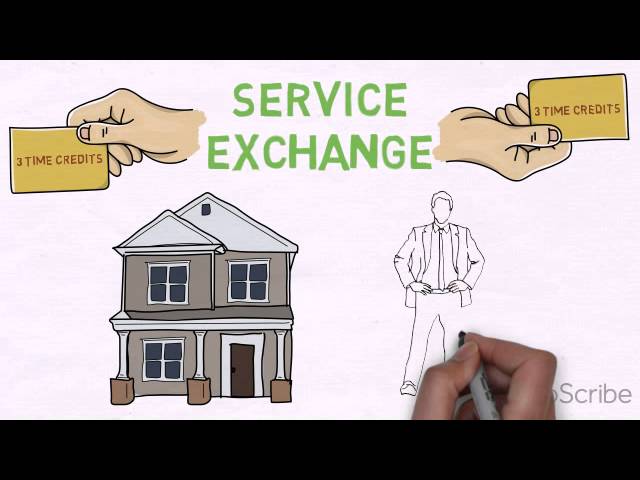
Some time-based currencies value everyone’s contributions equally: one hour equals one service credit.
If all hours are equal, regardless of the nature of the act, then an hour of tutoring earns onetime credit, just like an hour of legal help and an hour of house-cleaning services.
In these systems, one person volunteers to work for an hour for another person; thus, they are credited with one hour, which they can redeem for an hour of service from another volunteer.
Time banking aims to build the ‘core economy’ of family and community by valuing and rewarding the work done in it.
Helps to strengthen and rebuild the “core economy” of home, neighborhood, and community. The time dollar approach is based on the belief that every member of a community is a valuable resource (not just a “giver” or a “receiver”) and that each community has the capacity to pool these resources for its own social and economic good.
4. The Challenges
.
a) The risks incurred during implementation are primarily cultural, managerial, financial, safety, and project management risks.
b) There is the risk that the time bank faces resistance or apathy due to having no precedent in the culture where it is installed.
c) In addition, it is possible that time banks may not be welcome in all cultures. For example, in cultures that observe segregation between the two sexes or between social classes or ethnic groups, the inclusive nature of the time bank network may cause discomfort.
d) The risks incurred during implementation are primarily cultural, managerial, financial, safety, and project management risks.
e) There is the risk that the time bank faces resistance or apathy due to having no precedent in the culture where it is installed.
f) In addition, it is possible that time banks may not be welcome in all cultures. For example, in cultures that observe segregation between the two sexes or between social classes or ethnic groups, the inclusive nature of the time bank network may cause discomfort.
g) There is the risk of endangering members or enabling malicious behavior by being too inclusive. Moreover, there is the risk of inefficiency due to lack of logistical preparation.
h)There is the risk of financial unsustainability. Some banks have low overhead costs while others must pay staff to keep the exchange running.
i) Paid personnel can be a financial risk if there is no guarantee of long-term funds.
5. The Implementation Strategy :Universities
Ministry of Higher Education to encourage ALL public and private universities to establish Humanitarian Time Bank and each faculty has Co-Curricular Credit points for every student’s involvement in the program for each semester.
6. The Implementation Strategy : Schools
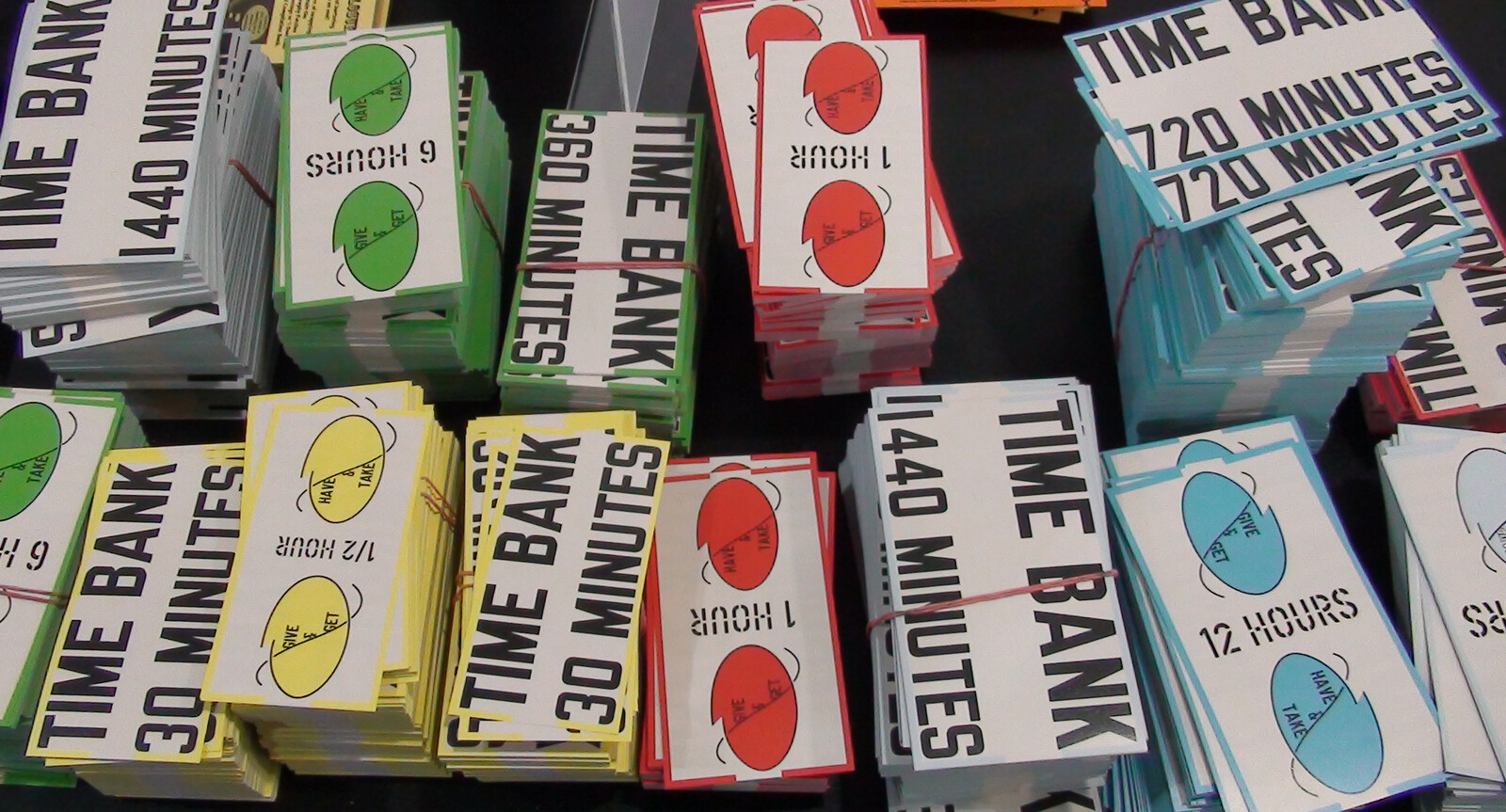
Ministry of Education to encourage ALL public and private schools to establish Humanitarian Time Bank and each school has Co-Curricular Credit points for every student’s involvement in the program for each semester.
7. The Implementation Strategy : GLC& Corporate Companies

Ministry of Human Resources to encourage ALL public and private institutions to establish Humanitarian Time Bank and each company would consider volunteerism as an element of evaluation in their Annual Job Performance Evaluation for salary increment and promotion.
8. The State and National Level Congress by RISIS
RISIS would conduct national and state level congresses and syndicate workshops will explore newer methodologies to make the Humanitarian Time Bank strategies more impactful in the light of nation building.
9) The Funding for Congresses
RISIS would solicit sponsorship from institutions under their corporate social responsibility budgets.
10. The National Leadership Awards
RISIS would organize gala dinner for the above with Federal Ministers and SPB YDP Agong in attendance.
11. The Volunteer Service Award and RISIS Certifying Organization
How to become a RISIS Certifying Organization?
RISIS would emulate the system and structure of the US Presidential Volunteer Service Awards https://presidentialserviceawards.gov/ in selecting the RISIS Certifying Organization.
12. The https://presidentialserviceawards.gov/
About the US President’s Volunteer Service Award.
In 2003, the President’s Council on Service and Civic Participation founded the President’s Volunteer Service Award to recognize the important role of volunteers in America’s strength and national identity. This award honors individuals whose service positively impacts communities in every corner of the nation and inspires those around them to take action, too.
The PVSA has continued under each new President’s administration, honoring the volunteers who are using their time and talents to solve some of the toughest challenges facing our nation. Led by the AmeriCorps and managed in partnership with Points of Light, this program allows Certifying Organizations to recognize their most exceptional volunteers.
13. The website: www. timebanks.org